


A consistent interview guide
Every interview starts from the same set of questions
Configure questions, prompts, and interview tone by topic to reduce inconsistencies across sessions.
Micro Chronicle’s AI interviewers help brands run hundreds of research interviews in parallel and help families preserve oral histories that future generations can hear.


FMCG research, product testing, and in-depth consumer interviews. Run hundreds of interviews simultaneously and receive transcripts and summary reports when they finish.
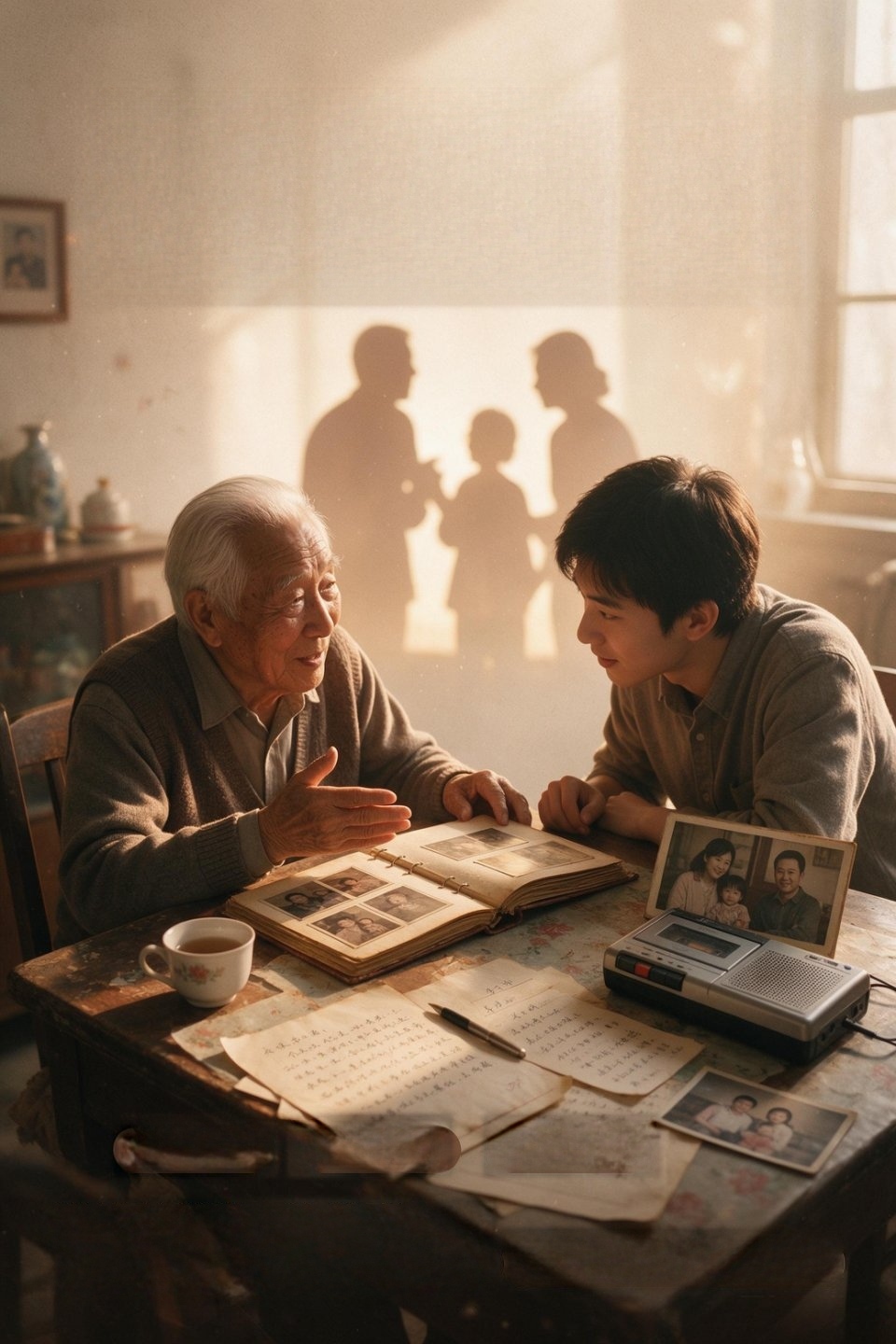
Interview older family members and preserve their voices and stories. Recordings and transcripts are saved for future generations to hear and read.
Opening preserves every interview transcript before grouping and summarizing answers by question, so important judgments can always be checked against what participants actually said.
Configure questions, prompts, and interview tone by topic to reduce inconsistencies across sessions.
Follow up when helpful, while still letting participants skip, go back, or end early. No one is forced to finish.
Each session keeps its transcript, and spoken answers retain their recordings, so results remain traceable to their source.
Group answers by question, inspect distributions, drill down to original audio, and use a private knowledge base to assist with organization.
Saga connects interviewing, editing, and family sharing, so memories do not remain scattered across recording files.
Start with small, specific questions and follow up when an answer is incomplete. Conversations can span multiple sessions and can end at any time.
Spoken answers become transcripts, with recordings and text kept together as a reliable basis for later editing.
Bring sessions together, distill a life timeline, and generate chapters. Add old photographs and continue revising the text.
Create reading links with optional passwords and expiration dates. Relatives can read and annotate, and the book can be exported to Word.
Opening is for brands and organizations conducting research interviews, with transcripts, answer grouping, charts, and summary reports. Saga is for individuals and families preserving oral histories, with chapters, timelines, photographs, and memoirs. Their accounts and project data remain separate.
No. Participants open the interview link in a browser. Voice answers require microphone permission and HTTPS in production. If recording is unavailable, participants can answer by typing instead.
Participant recordings are retained for 30 days by default and deleted by a cleanup task when they expire. Interview owners can manage, export, or delete their interview lists. Actual retention follows the Privacy Policy and the site configuration.
They should not be used without review. AI can misunderstand answers, omit details, or produce inaccurate text. Check names, dates, and important events against original recordings, transcripts, and source materials. Research conclusions still require human judgment.
The site currently provides Simplified Chinese, English, and Persian interfaces, with authored interview templates for all three content languages. The Persian welcome letter is text-only and never substitutes Chinese or English narration. Speech capabilities and additional languages will be introduced only after real speech, layout, and native-language checks are complete.